

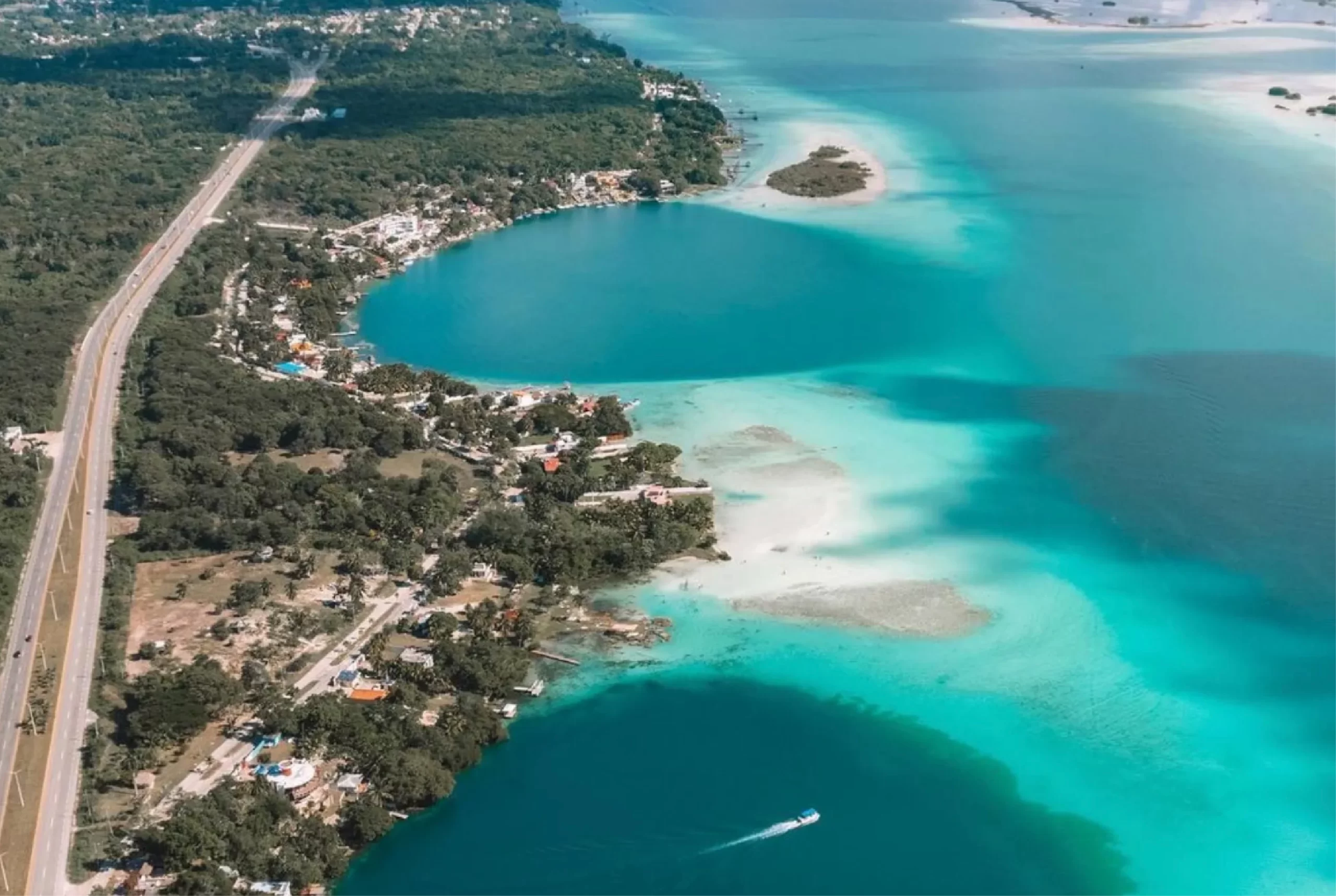
Bacalar infrastructure development is rolling out two major projects that will redefine mobility and protect the lagoon. The first is a Semarnat-approved 10-km Costera Norte. The second is an in-town street rehab program repairing the most damaged segments. This is the “capacity-before-density” playbook investors want to see. It signals long-term stability for residents, investors, and operators.
Bacalar Infrastructure Development: What’s Happening and Why It Matters
1) The new 10 km Costera Norte
Semarnat has authorized a two-lane, ~7 m-wide road set ~100 m from the shoreline. It will connect Villas Pehaltún to Cayuco Maya with defined access to Federal Hwy 307. The project has a budget of MXN 65M and a two-year construction window. There is also a 20-year period for operation and maintenance.
Crucially, the approval includes dozens of prevention and mitigation measures to protect the lagoon ecosystem (The Water Effect) and safeguard NOM-059 species. This is connectivity without sacrificing stewardship.
Official documents outline four segments (Tramo 1–4) and direct connections back to Hwy 307—ensuring mobility relief without forcing all traffic through Bacalar Centro. (Source: Reporte Quintana Roo)
2) Fast urban fixes inside town
The municipality has launched a street-rehab blitz to resurface ~8,000 m² of damaged streets. Work began at Av. 11 & Calle 12 (Serapio Flota Mass) and extends across Sor Juana Inés de la Cruz, Benito Juárez, Luis Donaldo Colosio, 5 de Mayo, Mario Villanueva Madrid, Gonzalo Guerrero, and other downtown segments.
Funded by more than MXN 3.6M from FORTAMUN, these improvements will enhance mobility and quality of life for ~12,500 residents. Additionally, thousands of annual visitors will benefit from the smoother urban flow.
Why Bacalar Infrastructure Development is Great for Investors and Residents
- Connectivity = Confidence. Projects with environmental approvals + budgeted civil works reduce execution risk. That’s the exact signal institutional buyers, lenders, and top-tier operators screen for.
- Better flow, less pressure. A north-coast corridor plus fixed urban segments means cleaner circulation, fewer chokepoints in Centro, and a smoother guest journey lagoon → town → highway. El Heraldo de México
- Guardrails for nature. The ~100 m setback and required mitigation measures are explicit checks against lagoon harm while still unlocking mobility—the right kind of governance for a fragile aquifer system.
“Not another Tulum” (lessons learned)
The region’s cautionary tale is rapid densification outpacing drainage, water, and waste systems. Multiple reports have documented infrastructure strain around Tulum—water/storm-water stress, irregular settlements lacking drainage, and aquifer-contamination risks—underscoring why infrastructure-first matters. Bacalar is choosing that path. El Economista Riviera Maya News
Investor & operator lens (practical takeaways)
- Proximity premium: Parcels with clean access to the Costera Norte or quick connectors to 307 should see stronger absorption and exit stories as travel time drops. Track time-to-site vs. comps.
- ADR & LOS lift: Smoother mobility + better urban experience typically nudge average daily rate and length of stay upward, especially in shoulder seasons when friction is most felt.
- Compliance as a moat: Projects that align with Semarnat-style guardrails—on-site treatment, stormwater planning, low-impact design—will resonate with eco-minded travelers and face fewer regulatory surprises.
Bottom line
Bacalar is building capacity before density—a savvy, sustainability-first route to long-term value. With the Costera Norte green-lit and in-town fixes underway, we’re dialing up connectivity, dialing down friction, and protecting the very ecosystem that makes this place magic. That’s how you grow a prolific market without losing its soul.